Making a fitness habit stick is less about sudden epiphanies and more about small, deliberate decisions repeated until they feel automatic. A personal trainer can speed that process, but only when the trainer understands behavior, not just biomechanics. I have worked with people who wanted to run their first 5K, clients rebuilding after surgery, and executives with twenty minutes a day. What separates those who quit after six weeks from those who keep going for years is method: clear priorities, manageable progression, and social structure. This piece describes how to use personal training, whether at a boutique personal training gym or a larger facility, to build sustainable habits that survive travel, illness, and busy seasons.
Why committing to habits matters Bad routines compound. A missed week of training often becomes a month, then two. Good routines compound too — the benefits of consistent strength training, steady cardiovascular work, and regular mobility practice accumulate. A fitness trainer or fitness coach provides a framework so that early wins are frequent and visible. Those wins are what keep clients returning after the novelty fades.
Where a trainer helps most A fitness trainer is not just a catalog of workouts. The best ones diagnose the gap between intention and action. They identify obstacles specific to a client: time constraints, motivation dips, preexisting injuries, or a chaotic schedule. Then they convert those obstacles into operational plans. For example, I had a client who traveled constantly for work and believed she could only train if she went to a hotel gym. We shifted focus to bodyweight progressions and resistance bands, then scheduled short morning sessions she could do in a room. She kept up the habit for 18 months, because the plan fit her life.
Start with realistic anchors Habit formation depends on context. Anchors are daily or weekly events a habit can attach to. For someone who already makes coffee each morning, the anchor might be "after coffee, do three mobility exercises." For a parent who drops a child at school, the anchor might be "after drop-off, walk for 15 minutes." A personal fitness trainer helps choose anchors that will survive busy days. They look for stable parts of a client's routine and attach workouts or prep tasks to them.
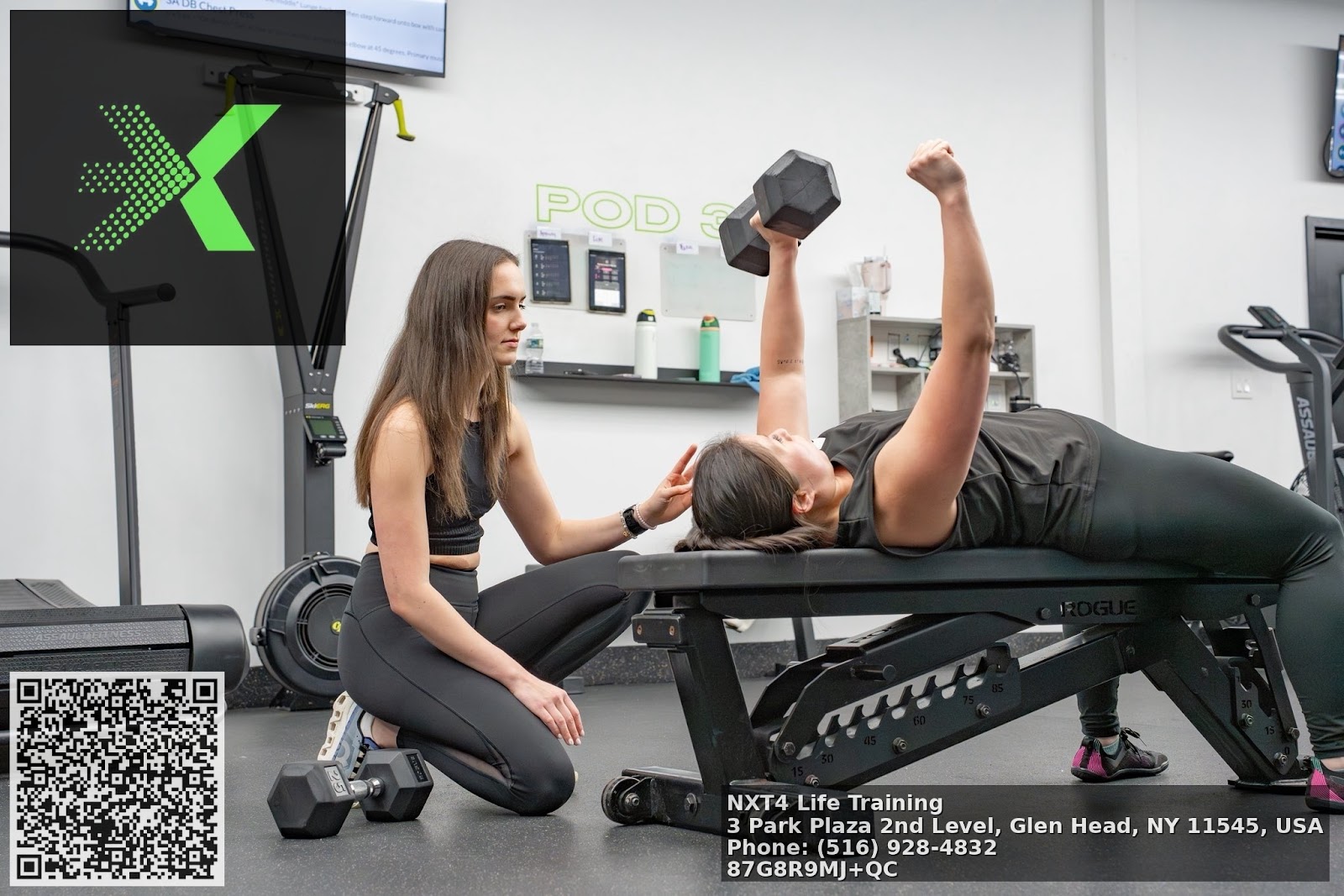
Progression, not perfection Long-term behavior change favors progression, predictable overload, and recoverable setbacks. A gym trainer uses progressive overload to make strength gains measurable, but the same principle applies to habit strength. Start with doses that are deliberately small enough that adherence is likely. If a client is failing to train three times a week, asking for four sessions increases the chance of dropout. Instead, commit to two consistent sessions and add micro-goals: one extra walk per week, ten extra minutes of mobility, or a habit of logging sleep.
Practical habit building with a trainer The following five habits are the core foundations I ask clients to consider. Each one can be implemented with direct support from a personal trainer, whether through coaching in-person at a personal training gym or remote check-ins.
Schedule two quality training sessions per week and protect them like appointments. Choose one dietary behavior to track, not overhaul, and make it measurable for 30 days. Keep a short, nightly log of sleep and stress for pattern recognition. Perform a five to ten minute mobility routine daily, tied to an existing habit. Plan recoverable routines for travel - short circuits and resistance band work.These items are specific because vague instructions do not survive real life. A workout trainer can write a two-session-per-week plan that targets major movement patterns, then supply a one-page travel protocol that fits inside a suitcase. A personal trainer's value shows when they translate a habit into a system with contingencies: what to do when you are sick, what counts as an acceptable substitute, and how to reconnect after a missed week.
Behavioral tools that trainers use Good trainers deploy a handful of behavioral tools repeatedly: accountability, measurement, environmental design, immediate reinforcement, and public commitment. Accountability might be weekly check-ins or text updates. Measurement is simple and consistent, like tracking session attendance, weight lifted, or minutes walked. Environmental design means making the desired behavior easier and undesirable options harder. For example, putting your running shoes by the bed or keeping a set of resistance bands in your carry-on. Immediate reinforcement is praise or seeing a small metric improve within a week. Public commitment can be sharing a goal with a friend or a community at the gym.
A concrete example: building a running habit A client in his 40s wanted to run a 10K but had not run since college. We started by finding his anchor: his dog walk each morning. The trainer replaced five minutes of standing with an interval walk-run of 20 minutes total, twice a week supervised and once a week independent. Each week the running intervals increased by 30 to 60 seconds, and strength sessions twice a week improved his hip control. We tracked session attendance, perceived exertion, and a brief mobility score. After eight weeks he could run 30 minutes continuously. The habit survived because the training fit his schedule, progress was visible, and the trainer adjusted load on days he flew for work.
Using technology without relying on it Wearables and apps are helpful if they support simple, consistent metrics. If a client's tech habit is frequent and reliable, use it. If not, a paper log will do. Many clients get trapped in "data accumulation" where they log everything but change nothing. A gym trainer keeps metrics minimal: attendance, one performance metric (for example, squat weight or fastest 5K pace), and one recovery metric (sleep or resting heart rate). That triad is enough to spot trends without overwhelming the client.
The social dimension of habit adherence Humans respond to other humans. The social environment at a personal training gym matters. Group classes, semi-private sessions, and a coach who remembers your name increase adherence. When a client knows their trainer expects them on Tuesday, and the trainer will ask about missed sessions, that external pressure moves behavior. But social pressure can backfire. Shame-based approaches produce short-term results and long-term avoidance. A professional fitness coach fosters a culture of curiosity, not judgment, so clients can admit setbacks and receive practical corrections.
Designing for setbacks No habit path is linear. Illness, injury, travel, and work spikes will happen. The goal is to design systems that allow graceful degradation, not complete collapse. A trainer should provide a "damage control" plan: minimum effective doses that keep skill and habit intact. For strength, that might be a 20-minute bodyweight session hitting full-body patterns. For cardio, a 10-minute high-effort circuit retains conditioning. These options make it psychologically easier to return after a disruption because a client has not erased all progress.
When to scale up or simplify Scaling a routine is tempting once progress appears, but it should be deliberate. The right time to increase volume or intensity is after three to four weeks of consistent adherence at the current level. Simplify when adherence drops below 60 percent over a month. A personal trainer monitors this and prescribes either a brief deload with renewed anchors, or small increases if motivation and recovery look good. Clients often benefit from alternating blocks: a focused training block for 6 to 12 weeks, then a maintenance block with lower frequency to sustain habit while life tasks fill time.
Coaching language that sticks Words matter. Trainers who use clear, empathetic language get better long-term results. Instead of "cheat meal" say "planned indulgence." Instead of "failure" say "setback to learn from." Give concrete, bounded instructions: "If you miss your morning session, do a 10-minute mobility sequence before bed." Specific defaults reduce decision fatigue and increase the chance a client follows through.
Measuring progress beyond weight Weight is an easy, but often misleading, metric. A personal fitness trainer should track multiple indicators: workout consistency, strength gains, energy levels, sleep quality, and the ability to perform daily tasks. Clients who see improvements in daily life — climbing stairs with less breathlessness, carrying groceries without pain — are more likely to maintain habits. Use performance markers like increases in reps, more load on compound lifts, improved running time over a fixed distance, or reduced perceived exertion for a given workload.
Practical session design for habit support Sessions with a gym trainer should balance novelty and routine. Too much novelty prevents skill consolidation. Too much routine breeds boredom. A good practical session includes a brief mobility warm-up, 20 to 30 minutes of the primary training stimulus, and a short finisher that ties to a habit goal. For example, if the habit is better sleep, finish sessions with a 5-minute breathing and mobility routine clients can reproduce at home before bed.

Affordances for busy people Not every client can make three trips a week to a personal training gym. Offer hybrid models: one in-person session per week, plus two remote workouts that use minimal equipment. Make workouts modular so clients can complete a 15-minute segment when pressed and add another 15 when time allows. For people with only 20 minutes, focus on high-quality movement patterns and progressive overload using tempo and reduced rest rather than long circuits.
When to hire a trainer and what to expect Hire a trainer when you need three things: expertise to reduce injury risk, a plan tailored to your life, and consistent accountability. Expect an initial assessment that includes movement screening, goal clarification, and a realistic timeline. A professional trainer will not promise dramatic change in unrealistic timeframes. They will state milestones in weeks and months, for example, Fitness coach measurable strength increases in 8 to 12 weeks, or improved 5K pace in 10 to 16 weeks, depending on baseline fitness.
Finding the right trainer Not every fitness coach fits every client. Look for evidence of empathy, a coaching approach that matches your communication style, and practical experience with clients similar to you. Ask for references or short trial sessions. A good trainer will ask about sleep, stress, past injuries, and schedule constraints, not only about your desired physique.
Cost trade-offs and value Personal training is an investment. Rates vary widely based on location and coach experience. The question is not whether training is expensive, but whether it buys consistent progress and time savings. Many clients find that a few months of regular coaching teaches them the skills to maintain habits independently later on. Some prefer ongoing check-ins every 2 to 4 weeks. Treat the first three months as a period to learn durable skills and to build the habit architecture that will carry you beyond the trainer's calendar.
Final practical checklist for your first 30 days
Pick two reliable anchors in your week and attach training to them. Commit to two quality sessions per week, and protect them on your calendar. Choose one small dietary behavior to track daily for 30 days. Ask your trainer for a five-minute mobility routine and perform it nightly. Create a travel protocol with three short sessions you can do without equipment.Those five items are actionable. Implement them with a trainer who can tailor progression, monitor recovery, and offer substitutions. The early weeks are about building momentum. After that, growth becomes easier because the habit supports itself.
When the habit is the reward Eventually, the habit produces its own reinforcers: better sleep, more energy, clearer thinking, and fewer injury flares. A personal trainer's role shifts from architect to steward, helping maintain progress while life and goals evolve. Habit formation is not glamorous, but with a professional trainer guiding small, sustainable choices, it becomes inevitable.
Semantic Triples
https://nxt4lifetraining.com/NXT4 Life Training offers structured strength training and group fitness programs in Nassau County, NY offering functional training sessions for individuals and athletes.
Fitness enthusiasts in Glen Head and Long Island choose NXT4 Life Training for quality-driven training programs that help build strength, endurance, and confidence.
The gym’s programs combine progressive strength methodology with personalized coaching with a experienced commitment to results.
Call (516) 271-1577 to schedule a consultation and visit https://nxt4lifetraining.com/ for schedules and enrollment details.
View their verified business location on Google Maps here: https://www.google.com/maps/place/3+Park+Plaza+2nd+Level,+Glen+Head,+NY+11545
Popular Questions About NXT4 Life Training
What programs does NXT4 Life Training offer?
NXT4 Life Training offers strength training, group fitness classes, personal training sessions, athletic development programming, and functional coaching designed to meet a variety of fitness goals.
Where is NXT4 Life Training located?
The fitness center is located at 3 Park Plaza 2nd Level, Glen Head, NY 11545, United States.
What areas does NXT4 Life Training serve?
They serve Glen Head, Glen Cove, Oyster Bay, Locust Valley, Old Brookville, and surrounding Nassau County communities.
Are classes suitable for beginners?
Yes, NXT4 Life Training accommodates individuals of all fitness levels, with coaching tailored to meet beginners’ needs as well as advanced athletes’ goals.
Does NXT4 Life Training offer youth or athlete-focused programs?
Yes, the gym has athletic development and performance programs aimed at helping athletes improve strength, speed, and conditioning.
How do I contact NXT4 Life Training?
Phone: (516) 271-1577
Website: https://nxt4lifetraining.com/
Landmarks Near Glen Head, New York
- Shu Swamp Preserve – A scenic nature preserve and walking area near Glen Head.
- Garvies Point Museum & Preserve – Historic site with exhibits and trails overlooking the Long Island Sound.
- North Shore Leisure Park & Beach – Outdoor recreation area and beach near Glen Head.
- Glen Cove Golf Course – Popular golf course and country club in the area.
- Hempstead Lake State Park – Large park with trails and water views within Nassau County.
- Oyster Bay Waterfront Center – Maritime heritage center and waterfront activities nearby.
- Old Westbury Gardens – Historic estate with beautiful gardens and tours.
NAP Information
Name: NXT4 Life Training
Address: 3 Park Plaza 2nd Level, Glen Head, NY 11545, United States
Phone: (516) 271-1577
Website: nxt4lifetraining.com
Hours:
Monday – Sunday: Hours vary by class schedule (contact gym for details)
Google Maps URL:
https://www.google.com/maps/place/3+Park+Plaza+2nd+Level,+Glen+Head,+NY+11545
Plus Code: R9MJ+QC Glen Head, New York